Wednesday, December 24, 2025

WORKS IN PROGRES....


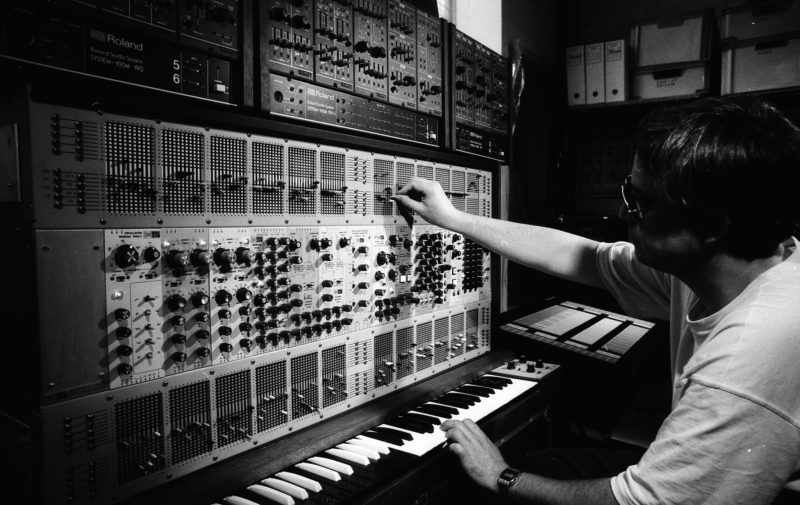
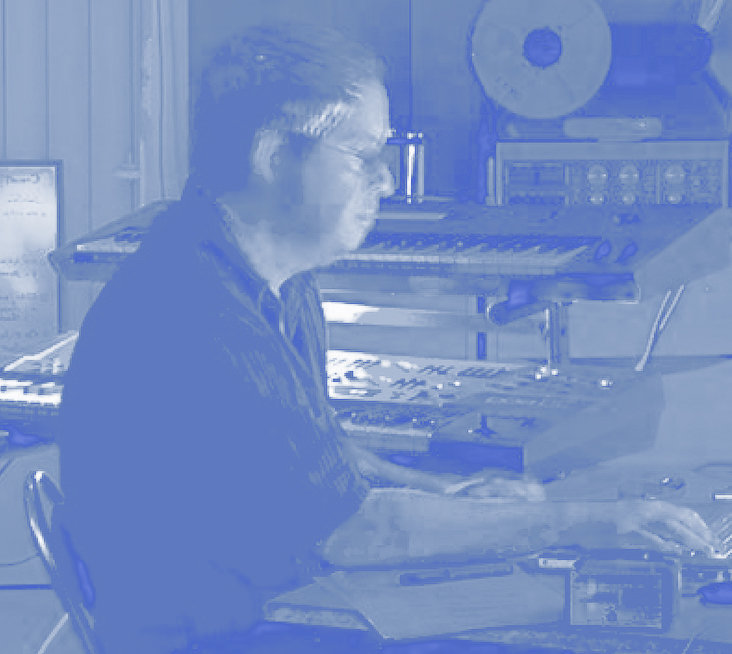
Music is now one of my main activities, along with reading and writing.

Not a day goes by without me immersing myself in sound, either experimenting with my instruments and creating new sounds, recording, or editing and mixing my recordings.

Many of these recordings are on hold in my archive.

Gradually, album projects are taking shape, based on a sound color, an atmosphere, a concept.

I am not a musician who remains trapped in one style or genre. 

I try to evolve, progress, and deepen my knowledge and practice at the crossroads of different musical trends that make it difficult to label...

Minimal, experimental, abstract, immersive, ambient, electro-acoustic, atmospheric—my music is a little bit of all of these things.

But ultimately, classifications don't really matter...

“The Origins of Astronomy” and “Perceptual Drift” are two albums that I consider to be finished. 

I consider albums to be “finalized” when I can listen to them over and over again, several times a day and day after day, without feeling the need to correct any flaws or make any improvements. This stabilization usually comes after several stages of editing and corrections.

These two albums will therefore probably be my first releases in the first quarter of 2026.

This year, 2026, should also see the completion of a collaborative project that is particularly close to my heart. I will come back to this soon...

In the meantime, I wish you all a very happy holiday season and, despite the desperate turmoil of our current world, a peaceful and happy 2026.


Monday, December 22, 2025

About the VST / Plugins Market


I suppose that, like all my fellow musicians, I am somewhat overwhelmed by the ads, promotions, and announcements, often sent in rapid succession, by manufacturers of virtual instruments and, in particular, by publishers of sampled instrument for Kontakt...
I can't help but wonder...
 
1. Has the “cinematic” criterion become the only selling point for these manufacturers? Are they no longer targeting the market of experimental, electroacoustic, neo-Berlin school, or other musicians? What exactly is “cinematic” music? Can anyone give me a definition?
 
2. Seeing the proliferation of instruments based on orchestral samples, symphony orchestras, string quartets, brass, woodwinds, guitars, etc... I wonder: aren't these Kontakt instrument manufacturers (in particular) basically sampling each other, pirating their own sample libraries with a few cosmetic changes?
 
Seriously, are there really so many instrument publishers who have the means to produce original libraries of string orchestras, felt pianos, or concert pianos?
 
I don't have the answer...
 
But the VST market, with its aggressive marketing, raises questions for me...
 
It's up to us musicians to be discerning and choose true innovation and creative potential from among commercial offerings that seem so redundant...
 
What do you think?

Sunday, December 21, 2025

COMING SOON...


  Pure cosmic music...  
To be released by Cyclical Dreams, January 2026.

Sunday, December 7, 2025

REVIEW OF "THE NORTHWEST PASSAGE" IN HOUZ-MOTIK MAGAZINE (ENGLISH TRANSLATION)

Review of "The Northwest Passage" by Ly Luan in HOUZ-MOTIK MAGAZINE 

 Link 


Sailing into the unknown: Christian Wittman and the ghosts of the Northwest Passage 

By mapping the void, modern Europe convinced itself that a maritime corridor lay dormant somewhere beneath the Arctic ice. The Northwest Passage was born of a geographical assumption that became a political obsession. Behind the legend were figures embarking on a journey that did not yet exist, and often toward their own demise. a chronicle of a record that scrutinizes the margins of the world rather than its myth.

Christian Wittman explores the myth of the Northwest Passage without heroism or folklore. In The Northwest Passage, he sculpts a soundscape of drones, creaks, and mists, where the Arctic becomes less a setting than a space of uncertainty. This is not an expedition narrative, but rather an inner drift, attentive to silences and discreet phenomena. The ambient album questions what remains when bodies disappear, transforming ice into something to be listened to rather than a spectacular image...


A tribute stripped of heroism


What strikes us immediately is the restraint. Wittman does not dramatize anything; he stretches out the space, lets the air circulate, and creates an unstable horizon where landmarks dissolve. The historical explorers, those who, from Hudson to Franklin, attempted to open a route between the Atlantic and the Pacific, never appear explicitly. The album simply inhabits their absence. We perceive fragments, auditory silhouettes, movements of dark masses; never heroic gestures, nothing commemorative. The tribute is conveyed through the material, not through narration.

Textures: coldness as architecture. The compositions are based on meticulous layering, subterranean drones, rustling sounds worked like sediments, abrasive layers that crack and then fall silent. Here, the sea is anything but flat. It breathes, swells, recedes; it acts as a discreet engine that supports each sequence. The creaking of icebergs seems to emerge from an intermediate space—neither documentary nor fictional—and it is this ambiguity that gives the record its density. The result clearly evokes a work of synthesis and sound design that seeks to reproduce physical phenomena rather than illustrate a polar postcard.


“It is not the Arctic that is inhospitable, but our ignorance of how to live in it.” – Vilhjalmur Stefansson (The Friendly Arctic (1921)


Inner journey vs. icy odyssey
 

The real movement of the album lies in its breathing. The pieces open like corridors of mist, tighten, fragment, then let the diffuse light back in. This is not a chronological narrative. We drift along, as if each track were questioning a state, a wait, a disorientation, an asceticism, without ever seeking resolution. The cold acts here as a functional metaphor: it strips away, reduces gestures, slows down thought. We find ourselves listening to the silences more than the sounds, as if the material were deliberately disappearing to allow vertigo to emerge.

The Arctic, not as a setting but as an interval. The last third of the album is the most compelling: Wittman achieves a sobriety reminiscent of certain minimalist works where a single movement is enough to maintain tension. The Arctic is not treated as a sublime spectacle, but as a zone of indeterminacy. It brings to mind the lines of old maps, the hesitant tracings, the errors of judgment that made the world seem bigger than it was. Far from the routes that were once sought to be forced through the ice floes, this album reminds us that there are still passages that can only be opened by paying attention. Here, the crossing is not geographical: it takes place in the fragile interval between what resonates and what fades away.
 

 Fantastic review of "The Northwest Passage' in the webzine Houz-Motic  by Ly Luan

 Link


Naviguer dans le blanc : Christian Wittman et les fantômes du Passage du Nord-Ouest


À force de cartographier le vide, l’Europe moderne s’est persuadée qu’un corridor maritime dormait quelque part sous les glaces arctiques. Le Passage du Nord-Ouest est né d’un postulat géographique devenu obsession politique. Derrière la légende, des silhouettes embarquées vers une route qui n’existait pas encore, et souvent vers leur propre disparition ; chronique d’un disque qui scrute les marges du monde plutôt que son mythe

Christian Wittman explore le mythe du Passage du Nord-Ouest sans héroïsme ni folklore. Dans The Northwest Passage, il sculpte un paysage sonore fait de drones, de craquements et de brumes, où l’Arctique devient moins un décor qu’un espace d’incertitude. Pas de récit d’expédition, plutôt une dérive intérieure, attentive aux silences et aux phénomènes discrets. Le disque ambient interroge ce qui subsiste quand les corps disparaissent, et transforme la glace en matière d’écoute plutôt qu’en image spectaculaire…

Un hommage débarrassé d’héroïsme

Photo Christian Wittman
Christian Wittman DR

Ce qui frappe d’emblée, c’est la retenue. Wittman ne dramatise rien, il étire l’espace, laisse l’air circuler, installe un horizon instable où les repères se dissolvent. Les explorateurs historiques, ceux qui, de Hudson à Franklin, ont tenté d’ouvrir une route entre Atlantique et Pacifique, n’apparaissent jamais explicitement. Le disque se contente d’habiter leur absence. On perçoit des fragments, des silhouettes auditives, des mouvements de masse sombre ; jamais de gestes héroïques, rien de commémoratif. L’hommage passe par la matière, pas par la narration.

Textures : le froid comme architecture. Les compositions reposent sur un travail de couches minutieuses, drones souterrains, bruissements travaillés comme des sédiments, nappes abrasives qui se fissurent puis se taisent. Ici, la mer n’a rien d’aplatissant. Elle respire, gonfle, recule ; elle agit comme un moteur discret qui soutient chaque séquence. Les craquements d’icebergs semblent surgir d’un espace intermédiaire – ni documentaire, ni fictionnel – et c’est cette ambiguïté qui donne au disque sa densité. Le rendu évoque nettement un travail de synthèse et de design sonore cherchant à reproduire des phénomènes physiques plutôt qu’à illustrer une carte postale polaire.

« It is not the Arctic that is inhospitable, but our ignorance of how to live in it.” – Vilhjalmur Stefansson (The Friendly Arctic (1921)

Traversée intérieure vs odyssée glacée

Photo Christian Wittman
Christian Wittman DR

Le véritable mouvement du disque se trouve dans sa respiration. Les pièces s’ouvrent comme des couloirs de brume, se resserrent, se fragmentent, puis laissent de nouveau entrer la lumière diffuse. On n’est pas dans un récit chronologique. On avance par dérive, comme si chaque piste interrogeait un état, attente, désorientation, ascèse, sans jamais chercher la résolution. Le froid agit ici comme une métaphore fonctionnelle : il dépouille, réduit les gestes, ralentit la pensée. On se surprend à écouter les silences plus que les sons, comme si la matière disparaissait volontairement pour laisser émerger le vertige.

À lire aussi sur Houz-Motik : une exploration sonore signée Andrew Heath et Christian Wittman

L’Arctique, non comme décor mais comme intervalle. Le dernier tiers du disque est le plus convaincant : Wittman y atteint une sobriété qui rappelle certains travaux minimalistes où un seul mouvement suffit pour maintenir la tension. L’Arctique n’y est pas traité comme un spectacle sublime, mais comme une zone d’indétermination. On pense aux lignes de cartes anciennes, aux tracés hésitants, aux erreurs d’appréciation qui faisaient le monde plus grand qu’il n’était. Loin des routes qu’on cherchait jadis à forcer dans la banquise, ce disque rappelle qu’il existe encore des passages qui ne s’ouvrent qu’en prêtant attention. Ici, la traversée n’est pas géographique : elle se joue dans l’intervalle fragile entre ce qui résonne et ce qui s’efface.


Saturday, December 6, 2025

[REVIEW]  ACHERON


 Review in Audion Magazine, #85, p. 35


Thursday, December 4, 2025

The Northwest Passage


 Dear all,

I invite you to join me in a trip into the uncharted, with my new album, "The Northwest Passage, an ambient odyssey through the silent, frozen expanse of the northern seas. 

The Northwest Passage was imagined and postulated from the globes and planispheres of modern Europe, before being sought by adventurous navigators who explored the icy waters of the Arctic in search of a sea route linking Europe to Asia, the Atlantic to the Pacific, an alternative to long voyages via the Strait of Magellan or the Cape of Good Hope.

In this album, slow, drifting drones, misty pads, and spectral textures conjure glacial horizons, icy winds, and the faint pulse of unseen currents. 

Each note carries you deeper into a world of solitude and shadow, where the beauty of the polar night unfolds in haunting, cinematic detail. This is sound as exploration—an immersive voyage to the edge of the world, and beyond.

Thanks for your support and your interest in my music!

Christian