Showing posts with label Paul Haslinger. Show all posts

Sunday, August 2, 2026

INTERVIEW OF PAUL HASLINGER. FROM TANGERINE DREAM TO THE SONIC GEOGRAPHIES OF noion MUSIC (1)


[Interview by Jacopo Vigezzi, originally published in Prog Rock Journal, July 10; republished with permission.  Link ]

From the sonic cathedrals of Tangerine Dream in the mid-80s to the intricate, pulse-pounding textures of Hollywood film scores, Paul Haslinger has spent his career at the intersection of formal academic rigor and cutting-edge technological experimentation. After two decades of defining the sound of modern cinema and television—from Underworld to Halt and Catch Fire—Haslinger is returning to his roots of total creative autonomy.


Alongside long-time collaborator Christian Wittman (of Lightwave), he has launched noion Music, a label dedicated to "atmospheric minimalism" and deep listening. The label’s inaugural releases, “Mallarmé” and “Borges,” serve as "curated sonic geographies" where mathematical precision meets the expansive, metaphysical depths of literature. We sat down with Paul to discuss the philosophy of the new label, his shared history with Wittman, and how a lifetime of "memory palaces" has led to this new chapter of sound art.


Paul, you’ve described noion as a platform for “atmospheric minimalism.” After such a vast career, what was the specific catalyst that made you feel now was the time to launch your own independent label?


When I think of record labels, the ones that truly inspired me always come to mind: ECM, New Albion, Made to Measure, Modern Love, Nonesuch. What made these labels stand out for me wasn’t just the excellent music, but the whole package: the control over artwork, the presentation as a whole, the conveyance of music. So after admiring all these labels for a long time, one quite naturally develops the wish to start something in the same vein on your own terms. A new field of possibilities, curated from the ground up and held to my impossibly high standards.


You and Christian Wittman have a creative history stretching back to Lightwave’s “Tycho Brahé.” How has your collaborative dynamic evolved from those early days to this new, paritarian partnership?


Friendships and musical collaborations often foster our “second family”: a group of people you encounter, interact with, and keep in touch with. In the case of Christian (and Christoph, a member of Lightwave), we first met in 1986, so we’ve known each other for 40 years. And we count quite a few chapters in that history.
We’ve also collaborated with an array of outstanding musicians. It was a 2004 project with Lightwave (Bleue Comme Une Orange) that introduced me to the late Jon Hassell, one of my key influences and musical father figures (together with Richard Horowitz).


I think the key to any long-lasting relationship, musical or otherwise, is the amount of electricity between people: how much you are able to inspire and propel each other toward something you would not have discovered on your own. This has certainly been the case in my friendship with Christian. No day and no conversation has ever been quite the same. We continue a process of discovery that started many years ago.

You’ve called the noion catalogue a “curated sonic geography.” How do you and Christian decide which "territories"—between Ambient, Drone, and Contemporary Classical—are worth exploring?
 

I think for both of us, a lifetime of listening to and absorbing music has resulted in a set of musical and creative preferences. They provide the foundations for most of our discussions and projects.
For the last 10–15 years, technological advances in music software have brought us to the point where we can create music in the style of Ligeti with just a laptop. And this approach—to create from memory and aesthetic selection—is very much aligned with the original concept of musique concrète.


This is a reactive approach, similar to photography. Haruki Murakami famously stated that he never knows where a book or story will end when he begins to write it. This is also our approach: we know the frame of a project, but we leave open all the possibilities within it.


INTERVIEW OF PAUL HASLINGER. FROM TANGERINE DREAM TO THE SONIC GEOGRAPHIES OF noion MUSIC (2)


[Interview by Jacopo Vigezzi, originally published in Prog Rock Journal, July 10; republished with permission.  Link ] 


 The label manifesto cites Boulez, Cage, and Eno. Which of these thinkers most closely mirrors your current belief that music is an “ethical category” rather than just an aesthetic one?
 

In my mind, Cage is the one closest to our approach, in his appreciation of chance within defined frames.
Common to all three is an interest in discovery, and the drivers of those moments of new insight are not always musical. They often involve philosophical and ethical components, as well as synergies between Western and Eastern thought.
All three also shared a deep appreciation of architecture, because the experience of space is so central to both their definition—and our definition—of musical discovery.


The inaugural tracks were recorded between Nina Studio in Paris and your Large Array in Los Angeles. What kind of technical and poetic dialogue exists between these two very different geographic poles?


In 2026, geographical distance has become quite relative. Thanks to file-sharing and video-conferencing, we have meetings every week, and our conversations go from technical discussions all the way to creative-aesthetic exchanges. We’ve both been obsessed with music for a long time, and beyond that, with books, philosophy, history – and the most fun conversations are always those that can go from the most minute details, to the most universal aspects of creation. It’s our definition of having fun. Lately we've been hearing about attempts to revive supersonic civilian flight, so I haven't entirely given up hope that one day I might once again meet Christian for a coffee in Paris!


In “Mallarmé,” you were inspired by a radical 1897 poem known for its fragmented typography. How did you translate those visual "silences" and the "abolition of chance" into a fluid sonic environment?


Mallarmé saw this poem as the opening of a new space, and in so many ways he demonstrated principles that became central to avant-garde music in the 20th century: non-hierarchical structures, free association, and the breaking of barriers. It is all contained within this text. You could also relate this to the founding principles of musique concrète.


This “field of experience” that Mallarmé was after is also very much reflected in our compositional approach. We typically start with a few musical elements that create a specific atmosphere in line with the poem. This becomes the basis from which we develop a catalogue of ideas in the form of small musical lines, themes, and gestures.


Eventually, we begin reducing and shaping those accumulated ideas into a sequence and balance that achieves the greatest clarity and impact. This is a critical step in the creative arc of these pieces: by reducing elements, we try to get to and unveil the essence of the piece.


Moving to “Borges,” the music unfolds like a labyrinth. How does the sound reflect Jorge Luis Borges’ specific fascinations with infinity, memory, and the unstable nature of reality?


Borges often takes scientific principles to extremes, and then, by distorting them, drives them into the absurd. Labyrinths are patterns that at one point become unpredictable, confusing. In music, we thought that patterns and sequences represent the starting point of order. And their deconstruction, fragmentation and modulation necessarily lead to an aleatoric structure. This, of course, brings us back to the open space of exploration. There is an obsessive quality in Borges, which we also tried to mirror in certain looping aspects of the music. There are always winks and a nice dose of humor in his descriptions of the absurd. Likewise, the music keeps a lighter tone, allowing for some of the comic qualities to shine through. 

INTERVIEW OF CHRISTIAN WITTMAN. FROM LIGHTWAVE TO ATMOSPHERIC MINIMALISM (2)


[Interview by Jacopo Vigezzi, originally published in Prog Rock Journal, July 10; republished with permission.  Link ] 


The collaboration between you and Paul Haslinger dates back to 1993’s “Tycho Brahé.” After all these years, what is it about your creative “alchemy” that makes this new partnership so effective now?

Between Paul and us—Lightwave and me—there is above all a forty-year friendship, built on mutual esteem and respect, and shared trust. This friendship was unlikely between a member of Tangerine Dream with an international following and us, musicians from the French underground… But it has grown stronger over the years, during my stays in California and Paul’s visits to Europe. And between Los Angeles and Paris, the internet now allows us to forge multiple creative connections and create a kind of virtual studio, a shared musical workspace, despite the distance and the time difference. Yes, indeed… creative alchemy… building itself through the back-and-forth exchange of tracks, stems, mixes, and ideas across the Atlantic.

It’s a fascinating creative process, because it’s unpredictable, resulting from our interactions, our suggestions, our feedback, our edits, our approvals… We speak the same musical language and therefore have an intuitive understanding of one another. We also trust each other enough to approve or reject what the other is doing. Paul’s editing and mixes based on my basic tracks extend and deepen my initial ideas, while enriching them and sometimes radically reorienting them. The resulting music is truly a shared creation, and it’s often hard to tell who did what in the final composition. It’s a bit like mixing paint palettes to the point where the original colors are unrecognizable in the final phase…


Ultimately, it’s a privilege to develop such a creative collaboration, in such an atmosphere of trust and mutual understanding, and it extends the experience of Lightwave, where we also had the same kind of intuitive musical communication. The difference is that back in the Lightwave days, we worked in the same studio, in live and improvised sessions, whereas with Paul, we work remotely and on a staggered schedule.

Much of the new material was recorded at your Nina Studio in Paris. How does the atmosphere of a European city like Paris influence the “geography” of these recordings compared to the Los Angeles sessions?
 

Nina Studio is my home studio, set up in my living space, in the inner suburbs of Paris. Obviously, a studio’s location influences creativity: the climate, the light, the vegetation, the architecture, and also, of course, the entire social and cultural environment. But a home studio is also a very personal and intimate space, surrounded by memories and meaningful objects… I also think of it as a workshop I’m accustomed to; I have my work routines there, my tactics and strategies for composition and recording, my favorite tools and instruments…. My studio, moreover, is surrounded by my extensive library of literature and the humanities. I believe this environment contributes significantly to my musical creativity, enriching it with all my reading and my own writing...

For the “Mallarmé” project, you mention capturing the “random, abstract essence” of the text. How do you translate the visual spacing of words on a page into “recurring patterns” of sound?

 
Our album consists of three parts, each a journey through different sonic and harmonic landscapes, featuring interplay between echoes, transitions, contrasts, and symmetries that evoke the leaps and rebounds of successive dice rolls triggering different harmonic events.  We wanted to play with the effects of continuity and rupture, and with forms of sonic ricochets punctuating the listening space. And as if by a mirror effect, our music aims to break the predictability of listening, just as Mallarmé’s text subverted the process of reading: just as the reader of Mallarmé was meant to hear the music of his text (some sources report that he composed his poem by strumming piano chords for entire nights), so too should the listener of our music, ideally, visualize juxtapositions of forms, breaks in line, syntactic ellipses, etc.

You’ve cited “automatic writing” from the French Surrealist movement as a major influence on these albums. Can you explain how you apply this “relaxed state of consciousness” to the highly technical world of modular synthesis?
 

Unlike strictly programmed music, with synchronized rhythm tracks, etc., or music that is written in advance and performed from a score, Lightwave’s music—and my solo music—relies heavily on improvisation, that is, on unreflective and unconscious creative flows, driven by the internal logic of what we play and hear. Back in the Lightwave days, there were two, three, or four of us improvising in the studio, live. We’d start the tape recorder—first stereo DAT, then ADAT multitrack—and play live, building the composition in the moment, interacting with one another. The first side of *Nachmusik*, for example, was actually recorded live during a single nighttime session, with nothing planned in advance.

In my solo work, I record track by track, but I try to maintain the same spontaneity. At the start of a session, I choose an instrument and go through different sounds… At some point, I settle on one of them and start recording: that sound guides my playing on the keyboard. For the second track, I start with a different instrument, and I play over the first track, on the fly, reacting to what’s already been recorded. And so on. Next comes the real composition phase: I make a rough mix and edit each track on the fly, mainly by deleting isolated notes or entire patterns, creating silences, dialogues between sounds, a progression, and recurrences. This editing process is very intuitive; I essentially read the layered MIDI tracks, reshaping each one in relation to the others, and immediately listening back to each edited section. These are therefore chains of intuitive, uncalculated decisions, made with a kind of floating attention that actually resembles the writing practices of the French surrealist poets, in particular states of consciousness that let the flow of words—and, in my case, sounds—run free.

I think Paul works in a similar way when it comes to editing and mixing the tracks from our respective stems. It’s also with this same spirit that we experiment with different track sequences and settle on a final one we both agree on. 

INTERVIEW OF PAUL HASLINGER. FROM TANGERINE DREAM TO THE SONIC GEOGRAPHIES OF noion MUSIC (3)


[Interview by Jacopo Vigezzi, originally published in Prog Rock Journal, July 10; republished with permission.  Link ]  


You’ve mentioned that your intellectual life is a “memory palace” full of books. Besides “Mallarmé” and “Borges,” what other authors inhabit the "rooms" of your current musical thinking?


It would certainly surpass the framework of this interview to take you on a full tour. And if I worked in advertising, I would say you need to check out the next few projects to find out.
But in expanding on my original statement, I would say that this personal memory palace is not only filled with books, but also with a vast catalogue of things my mind has bookmarked for one reason or another.


I believe that memories often drive creation, especially when, as in my collaboration with Christian, someone else’s catalogue of thoughts comes into play.


The original ceremonial function of music was often to support the recitation of poetry or religious texts. So the connection between story and sound has been with us for a very long time.
The knowledge of a vast catalogue of ideas creates the potential for new readings. No story is the same, and every story is the same. I think Borges would agree.


You handled the mixing and mastering for both releases. What was the greatest challenge in balancing the unhurried pace of these works with the meticulous precision required for such deep listening?


I think of this process as the ultimate treat for any composer: you are conducting the orchestra, you can fine-tune any detail down to a microscopic level, and you can alter the space and the relationships within that space at will.


As such, engineering and mastering this type of project requires the same degree of concentration that a conducting performance would.
In my mastering approach, I try to alternate between deep technical adjustments and general listening sessions away from the studio. It is a curious fact that in order to evaluate the flow of music, you have to alter your field of experience.


Many engineers do this by listening at extremely low volume, but I feel it is mainly a question of mindset. The absence of analysis while you listen.


What you feel often defies analysis.


You were classically trained in Vienna before joining Tangerine Dream at age 23. How much of that academic discipline still survives in the way you "sculpt" Electronic sound today?


While I certainly studied and always appreciated classical music, my real love was always in the studio and with the bands I was playing in.  I also studied musicology, so in many ways I am simply a music geek, endlessly obsessing over this or that thing I have just discovered.


The question brings us back to something I mentioned earlier: it is now possible to create and realize a piece similar to Varèse on a laptop with a collection of software tools. So even if you don’t have the resources or the training, many of the things you heard and admired are suddenly within reach.


I do think of music as an act of sculpting. And the aesthetic frame you use for that process ultimately consists of all the music you have heard before—and the quality of that music.


When I listen to strings, the fact that I grew up in Austria within a certain symphonic tradition will always influence how I evaluate string sound. A great deal of this simply becomes part of your system. It becomes part of your musical personality. 

INTERVIEW OF PAUL HASLINGER. FROM TANGERINE DREAM TO THE SONIC GEOGRAPHIES OF noion MUSIC (5)


[Interview by Jacopo Vigezzi, originally published in Prog Rock Journal, July 10; republished with permission.  Link ]  


After decades of scoring for film and games, how liberating is it to produce music that functions as a "field of experience" rather than a support for a visual narrative?


This is, of course, an important aspect. The freedom to create, shape, and explore is quite different from supporting picture.
 

The difference is not technical. I still enormously enjoy scoring films and television projects. It is more the openness of the playing field that is different. The fact that there is no script; rather, the script is written alongside the project. There is no film, but we may create a film in connection with the project. Those conditions create a fundamentally different framework for exploration. And once again, the old West Coast notion that “everything is possible” shines through.


Through “10 Phantom Rooms,” you develop virtual instruments. Do you see technology as a boundary to be pushed, or a tactile extension of the composer's hand? 


I think it is quite natural for musicians to continually tinker with their instruments. Mozart’s friend Anton Stadler developed a clarinet with an extended range, and it inspired Mozart to write new music that took advantage of those possibilities. New possibilities lead to new ideas. As such, I am simply trying to find ways to expand our virtual instrument palette, with the hope that these instruments, too, will become tools that enable new forms of creation.


It took eight years to find your solo voice for Exit Ghost. What advice would you give to the new generation of composers who feel pressured by the "speed and abundance" of today's music industry?


If I am being honest, there is very little advice I can give.
I am fully aware that my path has benefited from many moments of unplanned good fortune. And while you can give luck a chance—by studying, working, and playing with other musicians—it is never a guaranteed outcome.
 

I also believe that our strongest influences are often the people we look up to. As mentioned before, the examples set by Richard Horowitz and Jon Hassell continue to inspire me to this day.
There is also the fluidity of music itself. You can be absolutely certain about something today, and two years later it may look completely different.
 

In my view, it is extremely important to allow that process to happen. Allow yourself to be wrong, to rediscover. Stay open to change. Never carve your rules in stone.


Are there plans to bring the noion projects into a live setting—perhaps as acousmatic performances—or do you view these works as experiences destined strictly for the studio and home listening?

Some of our future projects could certainly have a live component (whether it’s a concert, sound installation, or part of a cross-disciplinary performance). For the moment, we have our hands full with the label, and we hope to start releasing physical editions, box sets, immersive formats, and eventually media expansions (books, films).

Paul Haslinger’s journey through noion is a testament to the enduring power of intellectual curiosity and the necessity of silence in an increasingly noisy world. By bridging the gap between scientific precision and evocative sound art, he and Christian Wittman have created a new compass for the contemporary experimental scene. As the label evolves into a platform for like-minded musicians, it promises to remain at the forefront of redefining artistic expression. “Mallarmé” and “Borges” will both be released on July 10, inviting listeners to embark on their own meditative journey through these meticulously crafted sonic labyrinths 

Wednesday, July 22, 2026

[REVIEW] MALLARMÉ [PROG ROCK WEBZINE, Review by Jacopo Vigezzi]


"The founding of noion Music is not merely the launch of a new label; it stands as an act of creative independence against an industry dominated by algorithms and functional “background music.” This project is the culmination of a forty-year creative relationship between Paul Haslinger (former Tangerine Dream member) and Christian Wittman (Lightwave), rooted in a mutual respect dating back to 1986. Together, they define their genre not as traditional composition, but as an exploration of Atmospheric Minimalism—searching for the sonic quintessence where silence is as vital as the note itself.

Conceptually, Haslinger treats music as a curated soundscape, a field of meditative experience that invites deep, mindful listening. The premise relies on Haslinger’s view of intellectual life as a palace of memory full of books, where literature serves as a compass for Electronic exploration. With “Mallarmé,” alongside the projected “Borges” project, this is the inauguration of that journey—a space where mathematical precision meets metaphysical depth. Released on July 10, 2026, “Mallarmé” features three massive tracks hovering around the twenty-minute mark, culminating in an edited version of “Jamais n’abolira.”

The album’s core is Stéphane Mallarmé’s seminal 1897 poem, “Un coup de dés jamais n’abolira le hasard” (A throw of the dice will never abolish chance). Wittman and Haslinger have translated the fragmented typography and visual silences of the page into a fluid sonic environment. Central to the album’s development is Wittman’s use of surrealist automatic writing to generate unconscious creative flows, which Haslinger then refines and sculpts technically. The objective was to capture the abstract essence of the text through a calm rhythm and recurring motifs, creating a geography where the intellect maps the sound.

The album unfolds through three primary movements that explore temporal elasticity and the perception of sound, effectively turning the listening experience into an active intellectual pursuit. The monumental opening, “Un coup de dés,” establishes the spatial parameters of the record. It serves as a game of mirrors and sonic ricochets, evoking the successive throwing of dice cited by Wittman to trigger unpredictable harmonic events. Here, the use of advanced virtual synthesizers and complex spatialization processes creates a sense of impressionistic abstraction. Motifs appear and vanish cyclically, challenging the predictability of traditional listening habits while establishing a vast acoustic gravity.

The focus shifts toward reductionism to reveal the work’s essence in “Jamais n’abolira.” This movement embodies the minimalist simplicity required to isolate harmonic clusters, mirroring how Mallarmé visually separated words across the page. Wittman and Haslinger have treated every harmonic element as an isolated word on a blank page, giving each sound a distinct semantic entity. Through a calm rhythm and imperturbable tempo, the track strips away the superfluous to reach maximum clarity and impact—an exercise in free association transporting the listener to a realm of pure tonal poetry.

“Le hasard” is the chapter dedicated to Chaos explores the fragmentation of structural predictability. The composition alternates between continuity and rupture, creating an experience of impressionistic abstraction. Characterized by sonic ricochet effects and a continuous interplay between flow and interruption, the structure reflects a multidimensional perception. Electronic modular systems (utilizing both the ARP 2600 and virtual MAX systems) generate evolving forms and timbral colors along an elastic temporal continuum. This is not a closure of discourse, but an open reflection on the fugitive nature of acoustic perception.

The album concludes with, “Jamais n’abolira – edit,” a condensed iteration of the second movement. Running just over six minutes, this version offers a more synthesized approach to the track’s core motifs, providing a focused entry point into its architecture. “Mallarmé” is the result of a poetic dialogue between the Nina Studio in Paris and Large Array in Los Angeles, overcoming geographical distances through technological integration. It is a necessary sanctuary of clarity, silence, and space amidst the noise of the 21st century.

This is not merely a technical exercise but a “mode of being” through sound. The production process itself—based on a continuous exchange of files and stems between the two studios—was treated by Haslinger not just as a mixing stage, but as a microscopic orchestration. Every detail was sculpted to alter the relationship between sound and space, inviting the listener to a mindful state that defies the current industry’s noise culture.

As the artists declare, this is only the beginning: noion will serve as a platform for like-minded musicians, with the Count of Lautréamont as the next literary territory to be explored. For those willing to undertake this meditative journey, “Mallarmé” is available from July 10, 2026."

Jacopo Vigezzi 


 Link

Saturday, July 18, 2026

[REVIEW] MALLARMÉ AND BORGES [STAR'S END]


"There is a lot of unresolved tension throughout the two releases inaugurating their Noion Music label. From start to finish Mallarmé (65:15) and Borges (41:53) are engaged in developing a new kind of tonality - a mode of expression that would absorb tradition without becoming trapped by it. Every track flickers with a very different kind of life. Dispatching swirling sonic symbols with meticulous abandon notes slow from a spatial compression into polite stasis.

Filling a listening space with music as fluid occupies a vessel, or smoke might circulate through a room, every new moment of Mallarmé and Borges is quickened by a fleeting darkness - alive and free. Varying in density, lightness and atmosphere these albums offer an experience akin to roaming the boundless corridors of a dreaming mind. We imagine encountering breathing strings, dislocated piano chords, a distant dissonant orchestra, and maybe even our own brains slowly reacting - as thoughts go off course in a concerted current of harmony and timbre. 

Musical lines collide, collude and combine in a ramble of melody, a flight of resonance, a search for consonance. With chords moving in contrary motion the mind is lead through a shadowy realm, concluding then in light. Haslinger & Wittman develop a poetic idea, suggest a scene, conjure a mood. Even as its accord of sound is opposed by dissonance we hear a unity in the arrangement and the message this collaboration is attempting to convey.  

Ambient Chamber Music could certainly do with more sophisticated takes on the genre like this one. With the shadows of history all around, our imaginative duo clears the stage for an aurally adventurous future."

Please tune in to the 07.19.26 broadcast of STAR'S END for music from Mallarmé & Borges the recent releases by Paul Haslinger & Christian Wittman, and more... Thanks! 

 Chuck van Zyl 

 Link 

Friday, July 17, 2026

[REVIEW] MALLARMÉ (ECHOES AND DUST)


Mallarmé  by Paul Haslinger & Christian Wittman

Release date: July 10, 2026
Label: Noion Music

Music inspired by another art form has always been there, and like any other, it can range from truly inspired to really pretentious and practically unlistenable.

Trying to go the inspired and inventive way are two already established musicians – Emmy-nominated Austrian composer Paul Haslinger (Tangerine Dream) and French composer Christian Wittman (Lightwave). For their new project, the duo has formed a special record label, Noion, that is starting by creating works inspired by big names in literature, with the first two releases being devoted to French poet  Stéphane Mallarmé (1842-1898) and Argentine writer and poet Jorge Luis Borges (1899–1986)

Of course, having in mind what Haslinger and Wittman have previously done, and based on the first release, simply titled Mallarmé, we get (and will keep getting) music that some label as atmospheric minimalism, that is, sound exploration, and genre-defying music – from ambient to contemporary classical and drone.

Many might consider that broad musical spectrum as overpopulated in these times, and you really have to be inventive and know what you are doing to make it all work, with Haslinger & Wittman adding another level of complexity to their concept – trying to draw the right elements from literature and transferring them into music, conveying at the same time the spirit of the written word while including elements that will indicate why it is those words that inspired them.

Yet, with all of their background and musical experience and knowledge, Haslinger & Wittman successfully turn their concept on Mallarmé into music that is both complex and understandable at the same time.


Link 

[REVIEW] MALLARMÉ (GREG FENTON, MAGAZINE SIXTY)


Magazine Sixty Music Review with Paul Haslinger and Christian Wittman

Greg Fenton reviews Paul Haslinger and Christian Wittman – Mallarmé – noion Music

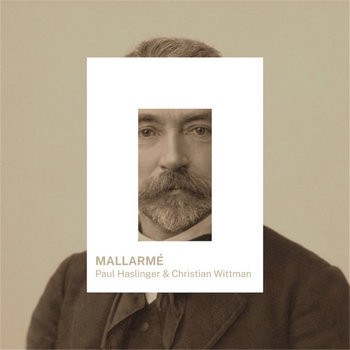
Four expansive pieces of music inspired by Mallarmé’s Un coup de dés jamais n’abolira le hasard are brought together in this artistic collaboration, which feels revelatory and invites the listener into a bold, deeply immersive musical world. The enduring power of the verse is signalled by the cover shot of Stéphane Mallarmé, whose stare, infused with purposeful meaning, dates from 1890. And while the impulse may have originated then, this album is filled with robust, modern discourse.

Apart from stating the obvious that musically the sounds used to form the compositions radiate as much contemporary energy as they gently echo the past, there is something transformative as you are transported into a whirlwind of emotions, sensory lifts and falls, amid a wild, exulted variety of imaginary memory. Given the passages are lengthy, tone and atmosphere are given free rein to expand and shift at will, which only heightens anticipation of change and its host of invigorating complexities. It is quite amazing to witness the physical shift as pieces of music move from melancholy to the more sublime, pausing at all points far and wide, very much like a deep investigation in motion, with emotionally persuasive ideas captured in the formation of sounds.

At times, the piano becomes the emotional centrepiece, almost singing; elsewhere, hot-wired electronics take over, driven by a radical interpretation of their consequences in a mixed-up world, or through evocative swells of synthesiser pads and strokes of modular sequencing. Throughout, it’s the extraordinary depth of communication—the constant interplay of light and dark—that makes this recording so compelling. Quite exceptional.

 Link 

Tuesday, July 14, 2026

REVIEW OF NOION MUSIC FIRST RELEASES!


"It is fascinating to listen to Christian Wittman and Paul Haslinger and to discover the sonic cartographies they shape, imbuing them with electroacoustic spheres and architectures. These sometimes move toward an environmental dimension, and at other times toward a more suggestive evocation, without directly incorporating the meditative elements traditionally associated with such approaches.

 
We are confronted with sketches, with explorations of acoustic relationships and sound processing that could be perceived as a minimal anamorphosis of musique concrète. These suspended works evoke less external landscapes than inner introspections, cinematic atmospheres, spaces of emotion, and intimate resonance.

 
Christian Wittman and Paul Haslinger have a complete mastery of this territory, where listening becomes a sensitive and immersive experience.

 
One is reminded of On Land by Brian Eno, though without its organic quality. A musical abstraction that is nevertheless not deconstructed, best experienced in semi-darkness, allowing the listener to perceive its smallest interstices."


 Thierry Moreau (Design, Digital creation) 


RELEASE OF "BORGES" AND "MALLARMÉ" !


 Dear friends,

I am delighted to announce the release of “Mallarmé” and “Borges,” two albums created in collaboration with Paul Haslinger, on our brand new label, noion music.

Born from nearly four decades of creative dialogue between the two of us, noion is a home for works that explore literature, memory, atmosphere, and deep listening. 

Inspired by the worlds of Stéphane Mallarmé and Jorge Luis Borges, these inaugural releases offer the first glimpse into a broader artistic vision—one where sound becomes a field of experience and listening an act of discovery.

This is only the beginning. Alongside future collaborations, noion will continue to explore new creative territories at the intersection of ambient, contemporary classical, minimalism, and sound art, inviting listeners into immersive sonic worlds shaped by curiosity, reflection, and imagination.

Our music is online on Bandcamp and on all the streaming / download platforms (Spotify, Deezer, Amazon, Qobuz etc etc….)


 Listen to "Mallarmé" and "Borges" in HD!   Link  

Tuesday, June 9, 2026

Mallarmé / album coming soon!


 "Inspired by one of modern literature’s most radical works, "Mallarmé" explores the shifting boundaries of meaning, time, and perception through sound. 

 In three fluid movements, Paul Haslinger and Christian Wittman create an immersive experience where music becomes a labyrinth of tonal poetry."

 The single "Jamais n'abolira" is available on all download / streaming platforms and on Bandcampç 

Friday, May 29, 2026

FIRST SINGLE FROM THE "MALLARME" ALBUM WITH PAUL HASLINGER

Available on all streaming and download platforms!


TANGERINE DREAM CONCERT, PARIS, OLYMPIA, 31 March 1986


 I just came across this text in my archives, written forty years ago, following Tangerine Dream’s two concerts at the Olympia in Paris in 1986.

Those concerts were organized by Serge Leroy, with the help of the Crystal Lake association.

Who could have predicted this long friendship with Paul Haslinger, which led to his participation on several Lightwave albums and, over the past year, to this collaborative effort that resulted in the creation of the noion music label and the first two albums produced together, “Mallarmé” and “Borges,” set to be released on July 10 on Bandcamp and all platforms?

Life sometimes holds surprising surprises….

 ———————————————


Who could have guessed that the leading band of European electronic music—those experimentalists who propelled trippy music to the top of the charts in the 1970s—would make such a sensational comeback?

 
Hey, guys, set your preconceptions aside for a moment... Open your ears and your eyes, let go of those overhyped labels... To you, is TANGERINE DREAM just ancient history? A bygone era? Are they musicians who have nothing left to say? Is it the outdated sound of modular synths and old-man music? Don’t get stuck on those preconceptions... Don’t trust musical “trends”… Just because the media ignores a band or an artist doesn’t mean their music is bad or outdated.  

So, as we were saying…  The March 31 concert at the Olympia… A truly special event… None of the major Parisian concert promoters had taken the risk of putting on this show… . “Tangerine Dream is over…,” they said… “There’s too much risk with a band that hasn’t been to France in five years…” So, it was a small association promoting electronic music, CRYSTAL LAKE, that decided to take on the challenge. They learned the ropes on the job and did everything: raising funds, handling press relations, advertising, and setting up all the technical infrastructure to accommodate the three musicians and a technical crew of about fifteen people... CRYSTAL LAKE truly moved mountains and proved that an alternative was possible in the world of show business... And so the big day arrived...

When the first notes rang out in the pitch-black Olympia, with the curtain drawn across the stage, we immediately noticed a change in sound. TANGERINE DREAM hadn’t played in France for five years. True, many albums have been released during this time. But the live sound has a warmth, an irreplaceable power. There are flute sounds, polyphonies that layer upon one another and create an atmosphere of anticipation. Anticipation, because it’s only after a minute that the curtains open… revealing the stage. It’s THE shock. I’m a regular at Dream concerts, yet every time, I can’t help it—it grabs me by the throat, my heart races, and I’m overcome.

Three massive cabinets, racks housing sequencers, mixing consoles, sound processing effects, synth expanders, and computer screens. In front, stacked keyboards. Between the racks and the keyboards, Edgar FROESE (on the left), Chris FRANKE (in the center), and Paul HASLINGER (on the right). This 23-year-old musician is the surprise of this tour: he brings a fresh look, energy, and technique that perfectly complement the expertise of FRANKE and FROESE.


So, as I was saying, the curtains open and I’m blown away. I’m blown away by the mountain of equipment, which flashes, pulses, oscillates, and beckons. I’m also blown away by the light show. Tangerine Dream has finally decided to create a visual environment that matches the caliber of its music. These are computer-controlled lights that create a hellish ballet of beams and colors materializing above the musicians. There are also projections standing out against the backdrop of the stage: clouds drifting across an abstract sky, flames twisting and setting the stage ablaze for the duration of a song, computer-generated geometric patterns... And then, the interplay of mirrors and reflective balls that make an entire audience
feel seasick, embarking on a cosmic journey through stars and galaxies. 


The music hits hard. The volume is cranked up to the max, and TANGERINE DREAM is certainly one of the loudest bands out there. You physically feel the bass, and you cling to your seat during certain infrasonic explosions. The rhythms are hellish. A drummer plays like a one-armed man alongside the electronic percussion programmed by our friends. It’s all breaks, rhythmic skids, tempo accelerations, and a barrage of beats—thanks to the use of very short delays—that give the impression the drumstick is bouncing and jittering on the drums. The music swings, pounds, and rocks. TANGERINE DREAM is at the top of its game. Chris FRANKE programs all the rhythms on computers, plays the Emulator, and changes floppy disks from time to time. Paul HASLINGER handles the polyphonies like a true pro: punchy chords and manual rhythms that underscore and accentuate the programmed beats. Edgar FROESE remains the melodist, who, with an ethereal phrasing, crowns it all. No, actually, I don’t know. It’s hard to tell who’s doing what, so tightly knit and absorbed are the three musicians. 

All their machines are interconnected and interact simultaneously. At one point, Paul and Edgar leave their keyboards and pick up their guitars. The volume cranks up another notch, and the rhythm section goes completely wild. By comparison, hard rock is music for seniors... The guitars scream and the musicians are having a blast. So is the crowd. It’s awesome... Chris FRANKE, absorbed in his rhythmic and percussive antics, calls his bandmates back to order: a chord on the Emulator and—boom—everyone returns to their respective keyboards for the rest of the set. By turns trippy, cosmic, melodic, and percussive, a hyper-professional show, where Dream, in a hyper-technological environment, with synths some of which are still prototypes, offers us unique music. We can’t think of anyone who can compare to them right now...

Well, yes, you missed something fabulous... The event of the month in March wasn’t the elections, but the DREAM concert. So, the next time TANGERINE DREAM comes to Paris, don’t say, when you see the posters: “That’s music from the past…”
“That’s the music of the future”
Because the future is today.


Thursday, May 21, 2026

"JAMAIS N'ABOLIRA" / FIRST SINGLE ON NOION MUSIC

Dear friends,

I am delighted to announce the launch of the noion music label, which I founded with Paul Haslinger:

LINK

Two collaborative albums—Mallarmé and Borges—will be released on July 10 on Bandcamp and all streaming platforms.

We just released “Jamais n’abolira,” the first single from Mallarmé.

“Un coup de dés jamais n’abolira le hasard.”
“A throw of the dice will never abolish chance.”
— Stéphane Mallarmé

Inspired by Mallarmé’s radical 1897 poem, the piece explores space, repetition, silence, and the shifting relationship between structure and chance. Slowly unfolding across immersive ambient textures and minimalist patterns, the music mirrors the poem’s fragmented architecture — where meaning drifts, reappears, and transforms through time.

“An immersive, unhurried space… where sounds and motifs reverberate in recurring patterns.” — Christian Wittman

Out now.
https://noionmusic.bandcamp.com/album/mallarme

Follow us on Facebook:  LINK 


Saturday, May 16, 2026

I'M GOING ON AN ADVENTURE....!

 noion Music is a label exploring atmospheric minimalism.

Founded by Paul Haslinger and Christian Wittman, each release focuses on clarity, silence, and space, inviting deep, mindful listening.

 Coming soon! 

Link


Friday, October 10, 2025

Q & A. COLLABORATION WITH PAUL HASLINGER?


One last question about Paul Haslinger: how did you meet him and what was your collaboration like? It seems that you currently have a project with him?

We met Paul in March 1986 during the two Tangerine Dream concerts at the Olympia, organized by Serge Leroy. Paul returned to Paris a few days later, and we met him again thanks to mutual friends. We had the opportunity to play him  Cités analogues  and discuss our musical activities. That was the beginning of a beautiful friendship that has lasted for decades, as it continues to this day. Our collaboration took many forms: we played two concerts together (in Paris and London), and Paul participated in five of our albums, either for occasional edits on our mixes or for direct creative input on certain tracks. It is thanks to Paul that we were sponsored by Atari at one point and signed by Hearts of Space/Fathom. Paul also recorded Jon Hassell's contribution to one of the tracks on Bleue comme une orange in his studio in Los Angeles. Paul has given us so much, both technically and artistically, and we have wonderful memories of rehearsals and composing in the studio, as well as the two concerts we gave together, not to mention the convivial moments in Paris and Los Angeles... 


Studio session in Paris in 2002 for the Lightwave album "Bleue comme une orange"

We had been discussing a reboot of our musical collaboration for some time. I took the initiative to get things going again in April of this year, and we started working remotely, exchanging audio tracks. Almost immediately, we found a common musical language, both minimalist and sophisticated, combining our expertise and personalities, and exploring directions that we had both ventured into. A first track emerged, then a second and a third, which Paul refined and improved in successive mixes, and whose direction we consolidated through exchanges of feedback and ideas.


Draft cover of the forthcoming album (SOOND label)


We named this album Mallarmé, in reference to the famous 19th-century poet who paved the way for modern poetry through his creative deconstruction of the French language and the typographical space of the handwritten and printed page. The three long pieces on the album are based on slowness, space, and the gradual metamorphosis of sounds and textures. Mallarmé is a project that opens up a listening space that is both minimalist and abstract, ambient yet quite contemporary. IMHO, its is a very beautiful album…  

Our album will be released by SOOND in the first quarter of 2026 (CD and digital), a label specializing in classical, contemporary, and electroacoustic music, from Johannes Brahms to Philip Glass, from Gesualdo to Bruno Letort.

We have also agreed with Paul to continue this collaboration, in a format different from Lightwave, but which may involve Christoph Harbonnier in future projects, recordings, and live performances.

Friday, July 11, 2025

HASLINGER - WITTMAN. MALLARME (work in progress)


First published in May 1897, Stéphane Mallarmé’s poem Un coup de dés jamais n’abolira le hasard occupies a singular place in the history of European literature. By applying non-linear principles to the construction of language, Mallarmé creates a seemingly chaotic yet meticulously orchestrated topography of meaning—transforming the poem into a labyrinth of signs, where reading becomes both constrained and expansive.

This radical gesture, rooted in the subversion of normative literary conventions and in the quest of "l'art pour l'art", is amplified by the dismantling of poetic syntax, narrative linearity, and fixed meaning—a rupture that redefines the very act of reading.

It is this spirit of spatial and semantic disruption that inspired the musical project by Paul Haslinger and Christian Wittman. Drawing on the temporal elasticity and multidimensionality of listening, they explore the fleeting nature of sonic perception.

Fluid and organically evolving, Mallarmé unfolds across three movements. Interweaving minimalism and experimentation, impressionism and abstraction, the work invites the listener into a realm of tonal poetry—a world of sound in perpetual reflection.