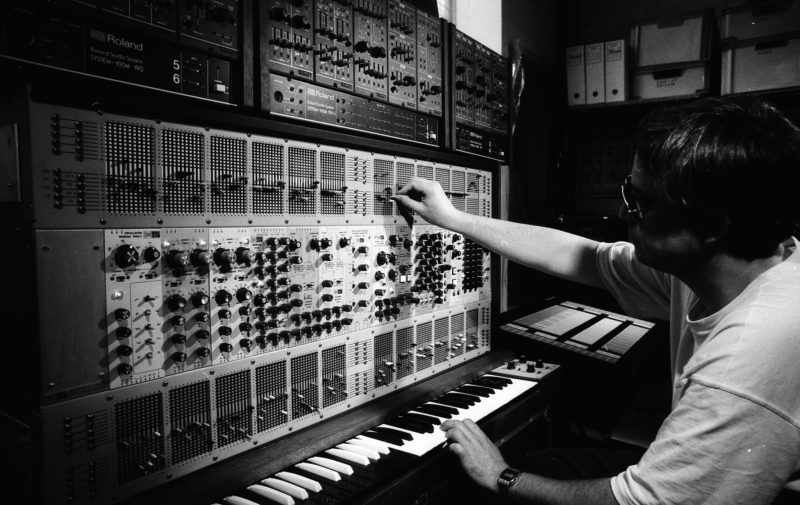
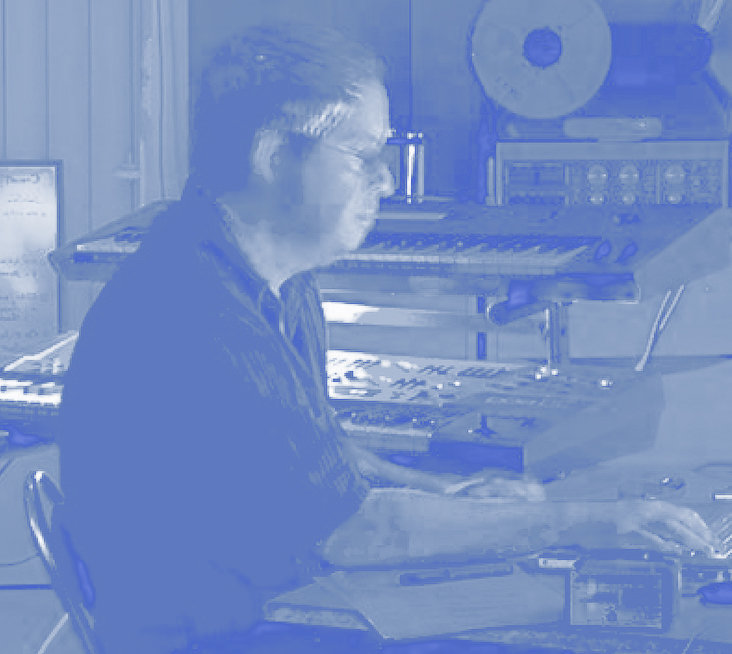
I am delighted to announce the release of “Mallarmé” and “Borges,” two albums created in collaboration with Paul Haslinger, on our brand new label, noion music.
Born from nearly four decades of creative dialogue between the two of us, noion is a home for works that explore literature, memory, atmosphere, and deep listening.
Inspired by the worlds of Stéphane Mallarmé and Jorge Luis Borges, these inaugural releases offer the first glimpse into a broader artistic vision—one where sound becomes a field of experience and listening an act of discovery.
This is only the beginning. Alongside future collaborations, noion will continue to explore new creative territories at the intersection of ambient, contemporary classical, minimalism, and sound art, inviting listeners into immersive sonic worlds shaped by curiosity, reflection, and imagination.
Our music is online on Bandcamp and on all the streaming / download platforms (Spotify, Deezer, Amazon, Qobuz etc etc….)
Two collaborative albums—Mallarmé and Borges—will be released on July 10 on Bandcamp and all streaming platforms.
We just released “Jamais n’abolira,” the first single from Mallarmé.
“Un coup de dés jamais n’abolira le hasard.” “A throw of the dice will never abolish chance.” — Stéphane Mallarmé
Inspired by Mallarmé’s radical 1897 poem, the piece explores space, repetition, silence, and the shifting relationship between structure and chance. Slowly unfolding across immersive ambient textures and minimalist patterns, the music mirrors the poem’s fragmented architecture — where meaning drifts, reappears, and transforms through time.
“An immersive, unhurried space… where sounds and motifs reverberate in recurring patterns.” — Christian Wittman
Out now. https://noionmusic.bandcamp.com/album/mallarme
I’m thrilled to unveil my new album, “Suspension”, a journey into the spaces between sound and silence. This work drifts beyond the familiar edges of ambient music, exploring abstract textures and fleeting atmospheres that linger like echoes in a quiet room. Each track is a suspended moment, a fragment of time where perception stretches and shapes dissolve.
Releasing it on Bandcamp Friday feels especially fitting. It’s a day that celebrates independent music and the bond between listeners and creators. Every listen, every download, every share becomes a thread in a larger tapestry, connecting you directly to the artists who make these sounds possible.
“Suspension” is an invitation—to pause, to wander through sonic landscapes, and to let the unexpected guide you. Your support today ensures that experimental music continues to breathe, grow, and reach ears ready to explore the unknown.
Step in, drift along, and thank you for sharing this suspended space with me.
Many thanks to Stephen Hill and to Hearts of Space for including two tracks of "The Nortwhest Passage" in this week radio program! I feel very honored!
Thank you so much Rodrigo Passannanti! Despite the proliferation of AI-generated music flooding streaming
platforms, despite biased and cynical algorithms that render so
many musicians invisible, despite the mainstream music ecosystem
cannibalizing independent artists... there are still ways to share music
and reach new listeners, through unconventional channels, between
enthusiasts with curious and open ears...
Is music like a fine wine that needs to be left to mature and age in a cellar before being consumed?
The “draft” section of my Bandcamp page is a bit like that cellar, where I organize my music by album projects, letting my compositions rest and withstand the test of multiple listens before crossing the threshold of publication...
It's also a kind of personal journal, where I archive moments of life and creativity that can span several months.
But there's also another reason, inherent to the type of music I compose. It's not written in the traditional sense, meaning I can't archive sheet music. The archive is the recording itself, the stereo tracks resulting from the final mix. I also keep an archive of all the recording sessions on my DAW, the stems of the different tracks, with the presets of the instruments and processes used and the mixing settings. This allows me to revisit and correct a recording months after the original session.
On the other hand, in electronic, ambient, or electroacoustic music, there is the central element of timbres and processes for spatialization and sound transformation. While melodic and harmonic elements can be notated using traditional musical notation, they are not the most important aspects of the music I create: the very nature of the sounds, their morphology, their movement in space, and their hybridization in the mix are the basis of my compositions.
There are undoubtedly notation and visualization systems that could capture the specificities of electronic music, but to what extent can the singularity of the sounds that make up the compositions be reproduced, and to what extent can a score of this type be played by other performers?
Some electronic music, predominantly melodic, can be written and performed by other musicians or even adapted for acoustic instrumentalists: Jean-Michel Jarre and Vangelis come to mind in particular. But I find it difficult to conclude that electronic works can become “repertoire works.” A special case is when the composer or group reinterprets their works in concert, with a greater or lesser degree of fidelity to the original work. Backing tapes and computer playback can preserve the essence of the original work. Kraftwerk and Jarre today, but also Tangerine Dream, rely on these devices, which can also take the form of control over pre-programmed loops and sequences triggered live.
But to return to my question, how can music based on drones, atonal layers, and movements in binaural space be visualized on a score?
First, I would like to wish you a very happy 2026, with happiness, health, and many new musical discoveries to help us endure the dystopian world in which we live.
The Cyclical Dreams label has just released my first album for 2026: “Andromeda,” a sonic journey into a distant celestial constellation, where everything is sparkling lights and mysterious resonances in vast cosmic expanses.
It is pure space music, atmospheric, organic, and climatic, attempting to reconnect with some of the sonic explorations of the Berlin pioneers in the 1970s. It is music of escape and dreams, inspired by Andromeda, daughter of Cassiopeia and wife of Perseus in Greek mythology, who was transformed into a constellation after her death.
The album is on sale until January 7, at a discount price.
Music is now one of my main activities, along with reading and writing.
Not a day goes by without me immersing myself in sound, either experimenting with my instruments and creating new sounds, recording, or editing and mixing my recordings.
Many of these recordings are on hold in my archive.
Gradually, album projects are taking shape, based on a sound color, an atmosphere, a concept.
I am not a musician who remains trapped in one style or genre.
I try to evolve, progress, and deepen my knowledge and practice at the crossroads of different musical trends that make it difficult to label...
Minimal, experimental, abstract, immersive, ambient, electro-acoustic, atmospheric—my music is a little bit of all of these things.
But ultimately, classifications don't really matter...
“The Origins of Astronomy” and “Perceptual Drift” are two albums that I consider to be finished.
I consider albums to be “finalized” when I can listen to them over and over again, several times a day and day after day, without feeling the need to correct any flaws or make any improvements. This stabilization usually comes after several stages of editing and corrections.
These two albums will therefore probably be my first releases in the first quarter of 2026.
This year, 2026, should also see the completion of a collaborative project that is particularly close to my heart. I will come back to this soon...
In the meantime, I wish you all a very happy holiday season and, despite the desperate turmoil of our current world, a peaceful and happy 2026.
Sailing into the unknown: Christian Wittman and the ghosts of the Northwest Passage
By mapping the void, modern Europe convinced itself that a maritime corridor lay dormant somewhere beneath the Arctic ice. The Northwest Passage was born of a geographical assumption that became a political obsession. Behind the legend were figures embarking on a journey that did not yet exist, and often toward their own demise. a chronicle of a record that scrutinizes the margins of the world rather than its myth.
Christian Wittman explores the myth of the Northwest Passage without heroism or folklore. In The Northwest Passage, he sculpts a soundscape of drones, creaks, and mists, where the Arctic becomes less a setting than a space of uncertainty. This is not an expedition narrative, but rather an inner drift, attentive to silences and discreet phenomena. The ambient album questions what remains when bodies disappear, transforming ice into something to be listened to rather than a spectacular image...
A tribute stripped of heroism
What strikes us immediately is the restraint. Wittman does not dramatize anything; he stretches out the space, lets the air circulate, and creates an unstable horizon where landmarks dissolve. The historical explorers, those who, from Hudson to Franklin, attempted to open a route between the Atlantic and the Pacific, never appear explicitly. The album simply inhabits their absence. We perceive fragments, auditory silhouettes, movements of dark masses; never heroic gestures, nothing commemorative. The tribute is conveyed through the material, not through narration.
Textures: coldness as architecture. The compositions are based on meticulous layering, subterranean drones, rustling sounds worked like sediments, abrasive layers that crack and then fall silent. Here, the sea is anything but flat. It breathes, swells, recedes; it acts as a discreet engine that supports each sequence. The creaking of icebergs seems to emerge from an intermediate space—neither documentary nor fictional—and it is this ambiguity that gives the record its density. The result clearly evokes a work of synthesis and sound design that seeks to reproduce physical phenomena rather than illustrate a polar postcard.
“It is not the Arctic that is inhospitable, but our ignorance of how to live in it.” – Vilhjalmur Stefansson (The Friendly Arctic (1921)
Inner journey vs. icy odyssey
The real movement of the album lies in its breathing. The pieces open like corridors of mist, tighten, fragment, then let the diffuse light back in. This is not a chronological narrative. We drift along, as if each track were questioning a state, a wait, a disorientation, an asceticism, without ever seeking resolution. The cold acts here as a functional metaphor: it strips away, reduces gestures, slows down thought. We find ourselves listening to the silences more than the sounds, as if the material were deliberately disappearing to allow vertigo to emerge.
The Arctic, not as a setting but as an interval. The last third of the album is the most compelling: Wittman achieves a sobriety reminiscent of certain minimalist works where a single movement is enough to maintain tension. The Arctic is not treated as a sublime spectacle, but as a zone of indeterminacy. It brings to mind the lines of old maps, the hesitant tracings, the errors of judgment that made the world seem bigger than it was. Far from the routes that were once sought to be forced through the ice floes, this album reminds us that there are still passages that can only be opened by paying attention. Here, the crossing is not geographical: it takes place in the fragile interval between what resonates and what fades away.
Fantastic review of "The Northwest Passage' in the webzine Houz-Motic by Ly Luan
Naviguer dans le blanc : Christian Wittman et les fantômes du Passage du Nord-Ouest
À force de cartographier le vide,
l’Europe moderne s’est persuadée qu’un corridor maritime dormait quelque
part sous les glaces arctiques. Le Passage du Nord-Ouest est né d’un
postulat géographique devenu obsession politique. Derrière la légende,
des silhouettes embarquées vers une route qui n’existait pas encore, et
souvent vers leur propre disparition ; chronique d’un disque qui scrute
les marges du monde plutôt que son mythe
Christian Wittman explore le mythe du Passage du Nord-Ouest sans héroïsme ni folklore. Dans The Northwest Passage,
il sculpte un paysage sonore fait de drones, de craquements et de
brumes, où l’Arctique devient moins un décor qu’un espace d’incertitude.
Pas de récit d’expédition, plutôt une dérive intérieure, attentive aux
silences et aux phénomènes discrets. Le disque ambient
interroge ce qui subsiste quand les corps disparaissent, et transforme
la glace en matière d’écoute plutôt qu’en image spectaculaire…
Un hommage débarrassé d’héroïsme
Christian Wittman DR
Ce qui frappe d’emblée, c’est la retenue. Wittman ne dramatise rien,
il étire l’espace, laisse l’air circuler, installe un horizon instable
où les repères se dissolvent. Les explorateurs historiques, ceux qui, de
Hudson à Franklin, ont tenté d’ouvrir une route entre Atlantique et
Pacifique, n’apparaissent jamais explicitement. Le disque se contente
d’habiter leur absence. On perçoit des fragments, des silhouettes
auditives, des mouvements de masse sombre ; jamais de gestes héroïques,
rien de commémoratif. L’hommage passe par la matière, pas par la narration.
Textures : le froid comme architecture. Les
compositions reposent sur un travail de couches minutieuses, drones
souterrains, bruissements travaillés comme des sédiments, nappes
abrasives qui se fissurent puis se taisent. Ici, la mer n’a rien
d’aplatissant. Elle respire, gonfle, recule ; elle agit comme un moteur
discret qui soutient chaque séquence. Les craquements d’icebergs semblent surgir d’un espace intermédiaire
– ni documentaire, ni fictionnel – et c’est cette ambiguïté qui donne
au disque sa densité. Le rendu évoque nettement un travail de synthèse
et de design sonore cherchant à reproduire des phénomènes physiques
plutôt qu’à illustrer une carte postale polaire.
« It
is not the Arctic that is inhospitable, but our ignorance of how to
live in it.” – Vilhjalmur Stefansson (The Friendly Arctic (1921)
Traversée intérieure vs odyssée glacée
Christian Wittman DR
Le véritable mouvement du disque se trouve dans sa respiration.
Les pièces s’ouvrent comme des couloirs de brume, se resserrent, se
fragmentent, puis laissent de nouveau entrer la lumière diffuse. On
n’est pas dans un récit chronologique. On avance par dérive, comme si
chaque piste interrogeait un état, attente, désorientation, ascèse, sans
jamais chercher la résolution. Le froid agit ici comme une métaphore
fonctionnelle : il dépouille, réduit les gestes, ralentit la pensée. On se surprend à écouter les silences plus que les sons, comme si la matière disparaissait volontairement pour laisser émerger le vertige.
L’Arctique, non comme décor mais comme intervalle. Le
dernier tiers du disque est le plus convaincant : Wittman y atteint une
sobriété qui rappelle certains travaux minimalistes où un seul
mouvement suffit pour maintenir la tension. L’Arctique n’y est pas
traité comme un spectacle sublime, mais comme une zone
d’indétermination. On pense aux lignes de cartes anciennes, aux tracés
hésitants, aux erreurs d’appréciation qui faisaient le monde plus grand
qu’il n’était. Loin des routes qu’on cherchait jadis à forcer dans la
banquise, ce disque rappelle qu’il existe encore des passages qui ne
s’ouvrent qu’en prêtant attention. Ici, la traversée n’est pas géographique : elle se joue dans l’intervalle fragile entre ce qui résonne et ce qui s’efface.
I invite you to join me in a trip into the uncharted, with my new album, "The Northwest Passage, an ambient odyssey through the silent, frozen expanse of the northern seas.
The Northwest Passage was imagined and postulated from the globes and planispheres of modern Europe, before being sought by adventurous navigators who explored the icy waters of the Arctic in search of a sea route linking Europe to Asia, the Atlantic to the Pacific, an alternative to long voyages via the Strait of Magellan or the Cape of Good Hope.
In this album, slow, drifting drones, misty pads, and spectral textures conjure glacial horizons, icy winds, and the faint pulse of unseen currents.
Each note carries you deeper into a world of solitude and shadow, where the beauty of the polar night unfolds in haunting, cinematic detail. This is sound as exploration—an immersive voyage to the edge of the world, and beyond.
Thanks for your support and your interest in my music!
I am pleased to offer you on my Bandcamp page “Views of Mind,” the intimate ambient album that was released on the Shimmering Moods label at the end of July.
For those who appreciate the physicality of CDs and the unique “collector's item” value of a beautiful object with original packaging, I am also offering the last seven copies of a limited edition, which is now sold out.
Kind regards to all
Christian —— “Views of Mind” continues my recent trend towards ambient chamber music, blending electronic soundscapes with acoustic instruments, and moving towards a kind of contemporary classical music.
Through its minimalism, this new album is introspective, unwinding the threads of a slow, fluid, serene and meditative musical reverie.
Like a sonic screen on which to project intimate films, “Views of Mind” encourages contemplative listening, away from the tumult of the world...”
I would like to share with you my new musical project, “Floating Indetermination (For Morton Feldman).”
It is a continuation of my previous work, a form of ambient music evolving towards contemporary, minimalist chamber music.
This album is a tribute to Morton Feldman, the American composer (1926-1987) whose instrumental work has been a source of inspiration for many ambient musicians, including Brian Eno.
Characterized by slowness, silence, and melodic sketches interspersed with sound objects that are echoed in different listening planes, “Floating Indetermination” seeks to explore new musical territories using electronic instrumentation, and in a way, blur the boundaries between ambient and contemporary and minimalist classical music.
The album contains over 90 minutes of music, including a 27 minutes extended version.
In the hope of sharing it as widely as possible, I am offering this album on my Bandcamp page on a “name your price” basis, thanking you in advance for your generosity if you wish to contribute...
I am pleased to announce the release of my new album, “Acheron,” on Bandcamp and all platforms !
I have worked hard on this album, which combines immersive ambient music with neo-classical sound palettes.
It is meditative and atmospheric music that invites you on a slow journey of the mind through a mysterious and forgotten world...
I hope you enjoy listening to this album as much as I enjoyed composing it!
Thank you for your continued support over the years!
Several musical projects are in the works for the coming months, including the first album in a series of collaborations with Paul Haslinger: “Mallarmé” ! More information coming soon!!!