Wednesday, July 22, 2026

[REVIEW] MALLARMÉ [PROG ROCK WEBZINE, Review by Jacopo Vigezzi]


"The founding of noion Music is not merely the launch of a new label; it stands as an act of creative independence against an industry dominated by algorithms and functional “background music.” This project is the culmination of a forty-year creative relationship between Paul Haslinger (former Tangerine Dream member) and Christian Wittman (Lightwave), rooted in a mutual respect dating back to 1986. Together, they define their genre not as traditional composition, but as an exploration of Atmospheric Minimalism—searching for the sonic quintessence where silence is as vital as the note itself.

Conceptually, Haslinger treats music as a curated soundscape, a field of meditative experience that invites deep, mindful listening. The premise relies on Haslinger’s view of intellectual life as a palace of memory full of books, where literature serves as a compass for Electronic exploration. With “Mallarmé,” alongside the projected “Borges” project, this is the inauguration of that journey—a space where mathematical precision meets metaphysical depth. Released on July 10, 2026, “Mallarmé” features three massive tracks hovering around the twenty-minute mark, culminating in an edited version of “Jamais n’abolira.”

The album’s core is Stéphane Mallarmé’s seminal 1897 poem, “Un coup de dés jamais n’abolira le hasard” (A throw of the dice will never abolish chance). Wittman and Haslinger have translated the fragmented typography and visual silences of the page into a fluid sonic environment. Central to the album’s development is Wittman’s use of surrealist automatic writing to generate unconscious creative flows, which Haslinger then refines and sculpts technically. The objective was to capture the abstract essence of the text through a calm rhythm and recurring motifs, creating a geography where the intellect maps the sound.

The album unfolds through three primary movements that explore temporal elasticity and the perception of sound, effectively turning the listening experience into an active intellectual pursuit. The monumental opening, “Un coup de dés,” establishes the spatial parameters of the record. It serves as a game of mirrors and sonic ricochets, evoking the successive throwing of dice cited by Wittman to trigger unpredictable harmonic events. Here, the use of advanced virtual synthesizers and complex spatialization processes creates a sense of impressionistic abstraction. Motifs appear and vanish cyclically, challenging the predictability of traditional listening habits while establishing a vast acoustic gravity.

The focus shifts toward reductionism to reveal the work’s essence in “Jamais n’abolira.” This movement embodies the minimalist simplicity required to isolate harmonic clusters, mirroring how Mallarmé visually separated words across the page. Wittman and Haslinger have treated every harmonic element as an isolated word on a blank page, giving each sound a distinct semantic entity. Through a calm rhythm and imperturbable tempo, the track strips away the superfluous to reach maximum clarity and impact—an exercise in free association transporting the listener to a realm of pure tonal poetry.

“Le hasard” is the chapter dedicated to Chaos explores the fragmentation of structural predictability. The composition alternates between continuity and rupture, creating an experience of impressionistic abstraction. Characterized by sonic ricochet effects and a continuous interplay between flow and interruption, the structure reflects a multidimensional perception. Electronic modular systems (utilizing both the ARP 2600 and virtual MAX systems) generate evolving forms and timbral colors along an elastic temporal continuum. This is not a closure of discourse, but an open reflection on the fugitive nature of acoustic perception.

The album concludes with, “Jamais n’abolira – edit,” a condensed iteration of the second movement. Running just over six minutes, this version offers a more synthesized approach to the track’s core motifs, providing a focused entry point into its architecture. “Mallarmé” is the result of a poetic dialogue between the Nina Studio in Paris and Large Array in Los Angeles, overcoming geographical distances through technological integration. It is a necessary sanctuary of clarity, silence, and space amidst the noise of the 21st century.

This is not merely a technical exercise but a “mode of being” through sound. The production process itself—based on a continuous exchange of files and stems between the two studios—was treated by Haslinger not just as a mixing stage, but as a microscopic orchestration. Every detail was sculpted to alter the relationship between sound and space, inviting the listener to a mindful state that defies the current industry’s noise culture.

As the artists declare, this is only the beginning: noion will serve as a platform for like-minded musicians, with the Count of Lautréamont as the next literary territory to be explored. For those willing to undertake this meditative journey, “Mallarmé” is available from July 10, 2026."

Jacopo Vigezzi 


 Link

Saturday, July 18, 2026

[REVIEW] MALLARMÉ AND BORGES [STAR'S END]


"There is a lot of unresolved tension throughout the two releases inaugurating their Noion Music label. From start to finish Mallarmé (65:15) and Borges (41:53) are engaged in developing a new kind of tonality - a mode of expression that would absorb tradition without becoming trapped by it. Every track flickers with a very different kind of life. Dispatching swirling sonic symbols with meticulous abandon notes slow from a spatial compression into polite stasis.

Filling a listening space with music as fluid occupies a vessel, or smoke might circulate through a room, every new moment of Mallarmé and Borges is quickened by a fleeting darkness - alive and free. Varying in density, lightness and atmosphere these albums offer an experience akin to roaming the boundless corridors of a dreaming mind. We imagine encountering breathing strings, dislocated piano chords, a distant dissonant orchestra, and maybe even our own brains slowly reacting - as thoughts go off course in a concerted current of harmony and timbre. 

Musical lines collide, collude and combine in a ramble of melody, a flight of resonance, a search for consonance. With chords moving in contrary motion the mind is lead through a shadowy realm, concluding then in light. Haslinger & Wittman develop a poetic idea, suggest a scene, conjure a mood. Even as its accord of sound is opposed by dissonance we hear a unity in the arrangement and the message this collaboration is attempting to convey.  

Ambient Chamber Music could certainly do with more sophisticated takes on the genre like this one. With the shadows of history all around, our imaginative duo clears the stage for an aurally adventurous future."

Please tune in to the 07.19.26 broadcast of STAR'S END for music from Mallarmé & Borges the recent releases by Paul Haslinger & Christian Wittman, and more... Thanks! 

 Chuck van Zyl 

 Link 

Friday, July 17, 2026

[REVIEW] MALLARMÉ (ECHOES AND DUST)


Mallarmé  by Paul Haslinger & Christian Wittman

Release date: July 10, 2026
Label: Noion Music

Music inspired by another art form has always been there, and like any other, it can range from truly inspired to really pretentious and practically unlistenable.

Trying to go the inspired and inventive way are two already established musicians – Emmy-nominated Austrian composer Paul Haslinger (Tangerine Dream) and French composer Christian Wittman (Lightwave). For their new project, the duo has formed a special record label, Noion, that is starting by creating works inspired by big names in literature, with the first two releases being devoted to French poet  Stéphane Mallarmé (1842-1898) and Argentine writer and poet Jorge Luis Borges (1899–1986)

Of course, having in mind what Haslinger and Wittman have previously done, and based on the first release, simply titled Mallarmé, we get (and will keep getting) music that some label as atmospheric minimalism, that is, sound exploration, and genre-defying music – from ambient to contemporary classical and drone.

Many might consider that broad musical spectrum as overpopulated in these times, and you really have to be inventive and know what you are doing to make it all work, with Haslinger & Wittman adding another level of complexity to their concept – trying to draw the right elements from literature and transferring them into music, conveying at the same time the spirit of the written word while including elements that will indicate why it is those words that inspired them.

Yet, with all of their background and musical experience and knowledge, Haslinger & Wittman successfully turn their concept on Mallarmé into music that is both complex and understandable at the same time.


Link 

[REVIEW] MALLARMÉ (GREG FENTON, MAGAZINE SIXTY)


Magazine Sixty Music Review with Paul Haslinger and Christian Wittman

Greg Fenton reviews Paul Haslinger and Christian Wittman – Mallarmé – noion Music

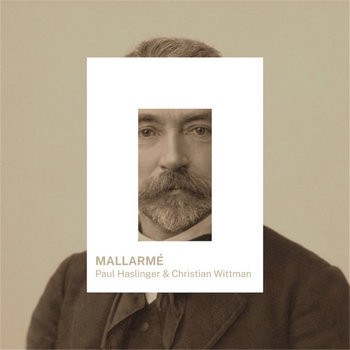
Four expansive pieces of music inspired by Mallarmé’s Un coup de dés jamais n’abolira le hasard are brought together in this artistic collaboration, which feels revelatory and invites the listener into a bold, deeply immersive musical world. The enduring power of the verse is signalled by the cover shot of Stéphane Mallarmé, whose stare, infused with purposeful meaning, dates from 1890. And while the impulse may have originated then, this album is filled with robust, modern discourse.

Apart from stating the obvious that musically the sounds used to form the compositions radiate as much contemporary energy as they gently echo the past, there is something transformative as you are transported into a whirlwind of emotions, sensory lifts and falls, amid a wild, exulted variety of imaginary memory. Given the passages are lengthy, tone and atmosphere are given free rein to expand and shift at will, which only heightens anticipation of change and its host of invigorating complexities. It is quite amazing to witness the physical shift as pieces of music move from melancholy to the more sublime, pausing at all points far and wide, very much like a deep investigation in motion, with emotionally persuasive ideas captured in the formation of sounds.

At times, the piano becomes the emotional centrepiece, almost singing; elsewhere, hot-wired electronics take over, driven by a radical interpretation of their consequences in a mixed-up world, or through evocative swells of synthesiser pads and strokes of modular sequencing. Throughout, it’s the extraordinary depth of communication—the constant interplay of light and dark—that makes this recording so compelling. Quite exceptional.

 Link 

Tuesday, July 14, 2026

NOION MUSIC RELEASES ON THE BBC!


REVIEW OF NOION MUSIC FIRST RELEASES!


"It is fascinating to listen to Christian Wittman and Paul Haslinger and to discover the sonic cartographies they shape, imbuing them with electroacoustic spheres and architectures. These sometimes move toward an environmental dimension, and at other times toward a more suggestive evocation, without directly incorporating the meditative elements traditionally associated with such approaches.

 
We are confronted with sketches, with explorations of acoustic relationships and sound processing that could be perceived as a minimal anamorphosis of musique concrète. These suspended works evoke less external landscapes than inner introspections, cinematic atmospheres, spaces of emotion, and intimate resonance.

 
Christian Wittman and Paul Haslinger have a complete mastery of this territory, where listening becomes a sensitive and immersive experience.

 
One is reminded of On Land by Brian Eno, though without its organic quality. A musical abstraction that is nevertheless not deconstructed, best experienced in semi-darkness, allowing the listener to perceive its smallest interstices."


 Thierry Moreau (Design, Digital creation) 


RELEASE OF "BORGES" AND "MALLARMÉ" !


 Dear friends,

I am delighted to announce the release of “Mallarmé” and “Borges,” two albums created in collaboration with Paul Haslinger, on our brand new label, noion music.

Born from nearly four decades of creative dialogue between the two of us, noion is a home for works that explore literature, memory, atmosphere, and deep listening. 

Inspired by the worlds of Stéphane Mallarmé and Jorge Luis Borges, these inaugural releases offer the first glimpse into a broader artistic vision—one where sound becomes a field of experience and listening an act of discovery.

This is only the beginning. Alongside future collaborations, noion will continue to explore new creative territories at the intersection of ambient, contemporary classical, minimalism, and sound art, inviting listeners into immersive sonic worlds shaped by curiosity, reflection, and imagination.

Our music is online on Bandcamp and on all the streaming / download platforms (Spotify, Deezer, Amazon, Qobuz etc etc….)


 Listen to "Mallarmé" and "Borges" in HD!   Link  

Friday, July 3, 2026

[REVIEW] MALLARME (Release date : July 10)


PAUL HASLINGER & CHRISTIAN WITTMAN – Mallarme
 
Inspired by what I gather to be a 19th century wordsmith by the name of Mallarme, the ex-Tangerine Dream and ex-Lightwave musicians have come up with three compositions lasting between 17 and 21 minutes featuring remarkably beautiful music.
 
“Un Coup De Des” opens with a slowly unfolding piano melody that kinda lulls you into a false sense of security, since you may be expecting it to lead into something more solid, but instead, it evolves into this electronic cosmic fogbank. Right up to the 13 minute point, layers of synths, wash over each other and it's all about texture, space and minimalism. Just over 13 minutes, the piano re-appears, but in a much darker setting as brief burts of drones come from below while the pianist is clearly not being paid by the note, with single chords allowed to rise up and slowly dissipate like smoke rings into a blue sky. 
 
Thus takes you to the final 90 seconds whereupon this wondrous choral section appears briefly- and it ends.......only to move straight into “Jamais N'abolira” which, at almost the same length as the first piece, is.....well......another lengthy track of non-rhythmic, non-melodic, textural, spacey, cosmic electronic music. As you'd expect, time and motion move very slowly in this universe, as synth textures, layers and sonic explorations mover over, under and around each other, and it kinda comes across as a 21st century answer to Tangerine Dream's “Zeit”, only more minimal.
 
The final track, “Le Hasard”, is again, another 17+ minute exercise in cosmic textural music, only here there's a bit more of an edge, a lot more darkness and , in places, louder, as the two musicians continue their electronic voyage into the realms of the seemingly infinite deep electronic unknown.
 
Fair to say, if you got off on “Zeit”, you've got a fair chance of loving this – personally, I can't get enough of it – a work of greatness.
 
Andy G., Inkeys